10 Books About Feelings for Toddlers and Preschoolers (2026 Guide)
Why Feelings Books Matter More Than You Think
Here's something that blew my mind when my daughter was 3: she could name every dinosaur in her book but couldn't tell me if she was sad or angry. She'd just... scream. And I'd just... guess.
Turns out, emotional vocabulary doesn't come naturally. Kids need to be taught feeling words the same way they learn animal names or colors. And one of the best, lowest-effort ways to do that? Reading about feelings together.
A good emotions book for preschoolers does more than label "happy" and "sad." It shows kids that feelings are normal, that everyone has them, and that there are things you can do when big feelings show up. The right book becomes a shared language between you and your child — something you can reference at 5 PM when everything falls apart.
Here are 10 feelings books for toddlers and preschoolers that actually deliver. These aren't just pretty on a shelf. They're the ones parents and preschool teachers reach for again and again.
The Best Feelings Books for Toddlers and Preschoolers
1. The Color Monster by Anna Llenas
This one is a staple for a reason. A fuzzy monster has all his feelings tangled up, and a little girl helps him sort them by color — yellow for happy, blue for sad, red for angry, and so on.
Why kids love it: the pop-up version is genuinely stunning, and the concept of matching colors to feelings clicks instantly with 2-4 year olds. After reading this, your child might start saying things like "I'm feeling red today." And honestly? That's a win.
2. In My Heart: A Book of Feelings by Jo Witek
This one goes beyond the basic four emotions. It covers bravery, shyness, fear, silliness, calm — and describes what each one feels like physically. "When I feel angry, my heart feels like it's going to explode."
The die-cut heart on every page is a clever touch. Best for ages 3-6. This is the book I recommend when parents say their kid knows "happy" and "sad" but nothing in between.
3. Grumpy Monkey by Suzanne Lang
Jim the chimpanzee is having a bad day and everyone keeps trying to cheer him up. Swing from trees! Eat a banana! But Jim doesn't want to be cheered up. He wants to be grumpy. And that's... okay.
This book is a gift for kids who get told to "cheer up" or "smile" when they're not feeling it. The message — sometimes you just need to sit with a feeling — is one a lot of adults still need to hear. Ages 3-7.
4. When I Feel Angry by Marcus Fieldwood
This isn't just a book you read — it's a book your child DOES. Part of the My Big Feelings activity book series, it's 80 pages of coloring, drawing prompts, breathing exercises, and interactive activities all focused on anger. Your 3-6 year old can scribble out their frustrations, draw what their anger looks like, and practice calming techniques right on the page.
It's the one book on this list that keeps working long after the first read. My daughter's copy is covered in crayon and she still pulls it out when she's upset. That's saying something.
5. Listening to My Body by Gabi Garcia
This book does something brilliant: it teaches kids to notice where feelings live in their body. Butterflies in your stomach? Tight shoulders? Hot face? Each sensation gets named and connected to an emotion.
For kids who can't yet articulate "I'm anxious," being able to say "my tummy feels weird" is a huge step. Best for ages 3-6. Teachers love this one for classroom use too.
6. The Feelings Book by Todd Parr
Todd Parr's bold, bright art style is instantly recognizable and perfect for the youngest readers. "Sometimes I feel silly. Sometimes I feel cranky. Sometimes I feel like doing nothing." Each page is simple, direct, and surprisingly validating.
This is the best pick for 2-3 year olds who need short sentences and big pictures. It normalizes the full range of feelings without making any of them "bad." A great first feelings book.
7. Ruby Finds a Worry by Tom Percival
Ruby discovers a Worry. At first it's small, but the more she tries to ignore it, the bigger it gets — until it follows her everywhere and blocks out everything good. When she finally talks about it, the Worry shrinks.
If you have an anxious 4-6 year old, get this book. The visual of the worry growing and shrinking is so powerful. After reading, you can ask your child, "Do you have a Worry following you today?" It opens a door that's otherwise hard to crack.
8. When I Feel Worried by Marcus Fieldwood
The companion to When I Feel Angry, this activity book gives anxious kids 56 pages of hands-on ways to process worry. There are drawing prompts, coloring pages, breathing exercises, and creative activities — all designed for ages 3-7.
What makes this different from a regular storybook is that your child is an active participant. They're not just hearing about a character who feels worried — they're working through their own worry with a crayon in hand. Great for bedtime worry routines or calm-down corners.
9. My Many Colored Days by Dr. Seuss
Yes, THAT Dr. Seuss. This lesser-known gem connects colors and animals to moods. "Some days are yellow. Some are blue. On gray days I don't know what to do." The illustrations (by Steve Johnson and Lou Fancher, not classic Seuss style) are gorgeous and dreamy.
It's abstract enough that your child can interpret it however they want, which makes for great conversations. Ages 2-5. Short enough for a wiggly toddler, deep enough for a thoughtful kindergartner.
10. B Is for Breathe: The ABCs of Coping with Fussy and Frustrating Feelings by Melissa Munro Boyd
Each letter of the alphabet introduces a coping skill or emotional concept. A is for Appreciate, B is for Breathe, C is for Create. It's a clever format that turns SEL into something kids can interact with.
Best for ages 4-7, especially kids who love learning the alphabet and feeling like "big kids." It gives them concrete strategies, not just labels — and that's where the real power is.
How to Get the Most Out of Feelings Books
Buying the book is step one. Here's how to make it actually stick:
- Read it when they're calm. Don't pull out a feelings book mid-meltdown. Read it at bedtime, on a lazy Sunday, in the car. Plant the seeds before the storm.
- Pause and ask questions. "Have you ever felt like that?" "What does your face do when you're angry?" Keep it casual — not like a quiz.
- Reference it later. "Remember Jim the Grumpy Monkey? I think you might be feeling grumpy like Jim today." Connecting the book to real life is where the learning happens.
- Keep them accessible. Don't shelve feelings books with the rest of the collection. Put one in the calm-down corner, one in the car, one by the bed. They should be within reach when feelings hit.
- Reread, reread, reread. Kids learn through repetition. Your 3-year-old wanting to read The Color Monster for the 47th time? That's not annoying. That's learning.
Building an Emotional Vocabulary, One Page at a Time
You don't need all 10 of these books. Pick two or three that match where your child is right now. A 2-year-old who's just starting to feel big feelings? Grab The Feelings Book and The Color Monster. A 5-year-old dealing with worry? Ruby Finds a Worry and When I Feel Worried are your go-tos.
The goal isn't to create a mini therapist. It's to give your child the words — or the colors, or the monsters, or the crayon drawings — to express what's happening inside them. Because a kid who can show you what they feel is a kid who doesn't need to throw a shoe to get your attention.
And that's better for everyone.
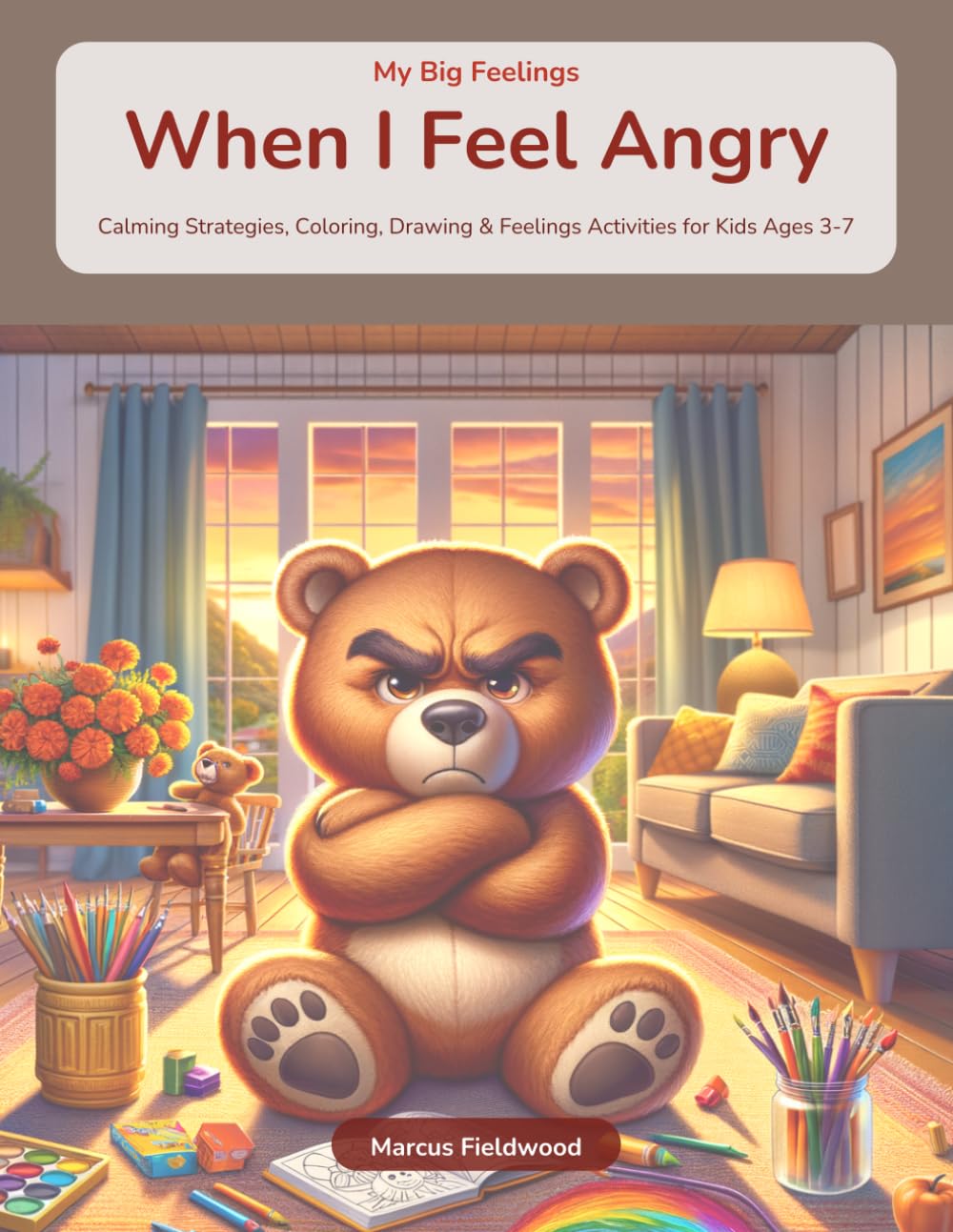
📚 When I Feel Angry
Anger Management Activity Book for Kids Ages 3-7 — 80 pages of hands-on activities.
Buy on Amazon — $14.99