5 Calming Techniques for Angry Kids That Actually Work
When "Calm Down" Doesn't Cut It
Your 4-year-old just threw a truck at the wall because his tower fell over. Your 3-year-old is screaming in the grocery store because you said no to the cookie. You're standing there thinking: I know I'm supposed to help them regulate, but HOW?
You're not alone. Anger management for toddlers and preschoolers is one of the trickiest parts of early parenting — because their feelings are enormous, and their brains are still under construction.
Here's the good news: there are calming techniques for angry kids that actually work. Not in a Pinterest-perfect way. In a real, messy, Tuesday-afternoon kind of way. Let's get into them.
1. The "Stomp It Out" Method
When a child is mid-meltdown, their body is flooded with stress hormones. Telling them to sit still and breathe is like telling a shaken soda bottle to just... stop fizzing.
Instead, give them a physical outlet. Tell them: "Let's stomp it out! Stomp as hard as you can!"
Stomp with them. Count the stomps together. Ten big stomps, then five smaller ones, then two tiny ones. You're helping their body burn off that adrenaline while giving their brain something structured to follow.
Why it works: Big muscle movement activates the parasympathetic nervous system. In plain English — moving hard helps the body calm down faster than sitting still.
2. The "Hot Cocoa Breath"
Okay, yes, this is technically a breathing exercise. But it's one that actually lands with little kids because it uses their imagination.
Ask them to cup their hands like they're holding a mug of hot cocoa. Smell the cocoa (breathe in slowly through the nose). Cool it off (breathe out slowly through the mouth).
Three rounds of this genuinely shifts something. The key is doing it WITH them — not standing over them saying "breathe." Sit down. Cup your own hands. Make it a thing you do together.
This works especially well for kids ages 3-5 who respond to pretend play. You can even ask, "What flavor is your cocoa today?" once they're calmer. That little creative question signals to their brain that the danger has passed.
3. The "I'm a Volcano" Technique
This one is for the kid who's about to blow — or just did.
Teach this when they're calm (not mid-eruption). Practice it like a game:
- "The lava is rising!" — clench fists, scrunch up your face, tighten your whole body
- "The volcano is rumbling!" — shake your arms and growl
- "ERUPTION!" — jump up, throw arms wide, yell it out
- "Now the volcano is cooling down..." — slow, heavy breaths, melt like lava onto the floor
This gives kids a script for what anger feels like in their body — and a way through it. When they're actually angry later, you can say, "I think your volcano is rumbling. Want to erupt?" It gives them permission to feel the feeling instead of stuffing it down.
4. The Calm-Down Corner (That They Actually Use)
You've probably heard of calm-down corners. The reason most fail? Kids see them as punishment — basically a renamed time-out chair.
Here's how to make one that works:
- Let your child help set it up. They pick the spot. They choose what goes in it.
- Stock it with sensory tools: playdough, a stress ball, a pinwheel to blow, a soft blanket.
- Add a feelings-focused activity book they can flip through — something with coloring pages, drawing prompts, or breathing exercises they can do independently. (Our activity book When I Feel Angry was designed exactly for this — 80 pages of drawing, coloring, and calming exercises that give little hands something to do when big feelings hit.)
- Use it yourself sometimes. "Mama's feeling frustrated. I'm going to sit in our calm corner for a minute." This models that it's a tool, not a punishment.
The magic is in the ownership. When it's THEIR space, they'll actually go to it.
5. Name It to Tame It
This one comes straight from neuroscience, and it's simpler than it sounds.
When your child is angry, help them label what they're feeling. Not with a lecture — with a simple mirror statement:
- "You're really mad that your sister took your toy."
- "Your face looks angry. That must feel awful."
- "You wanted the blue cup and you got the green one. That's frustrating."
Research by Dr. Dan Siegel shows that naming an emotion actually calms the amygdala — the brain's alarm system. When a child hears their feeling named out loud, their brain goes from "DANGER" mode to "oh, someone understands me" mode.
Don't expect it to work like a light switch. But over time, you'll notice your child starting to name their own feelings. And that's huge. A 5-year-old who can say "I'm angry" instead of biting their friend has learned one of the most important skills they'll ever have.
The Real Secret Behind All of These
You probably noticed a theme: every single technique involves YOU doing it with them. That's not an accident.
Young kids can't regulate their emotions alone. Their prefrontal cortex — the brain's "calm down" center — won't be fully developed until their mid-twenties. (Yes, really.) Right now, YOU are their prefrontal cortex.
So the most powerful calming technique for angry kids? Your calm presence. Even when it's hard. Even when you want to yell too. Your regulated nervous system is the thing that teaches theirs how to work.
You don't have to be perfect at this. You just have to keep showing up. And on the days when you lose your cool? That's okay too. You can always repair it: "I yelled, and I'm sorry. I was angry too, and I didn't handle it well. Let's both try again."
That repair? That's the most powerful lesson of all.
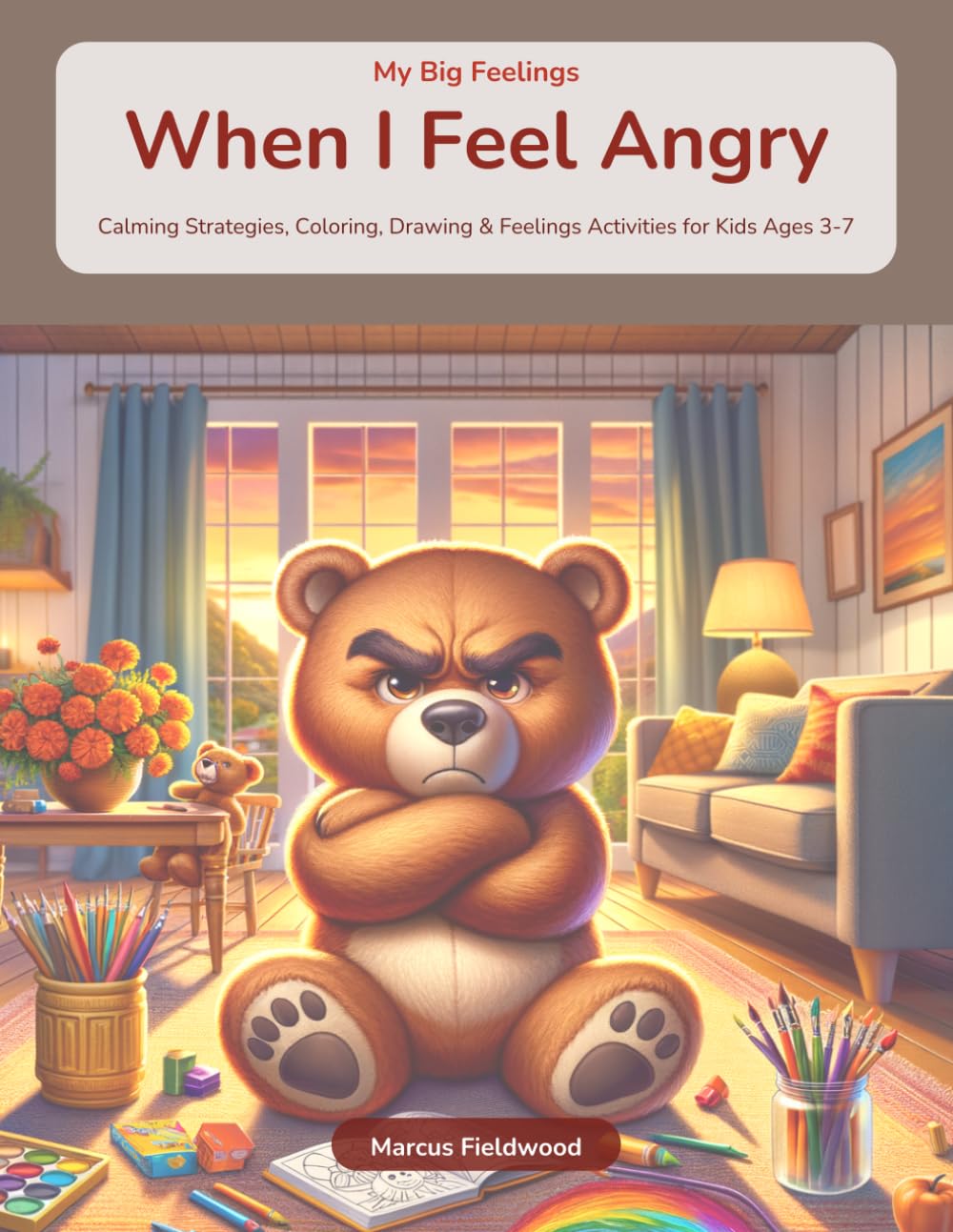
📚 When I Feel Angry
Anger Management Activity Book for Kids Ages 3-7 — 80 pages of hands-on activities.
Buy on Amazon — $14.99